
Motor Vehicle Accident Law Explained: Understanding Your Rights After a Traffic Collision
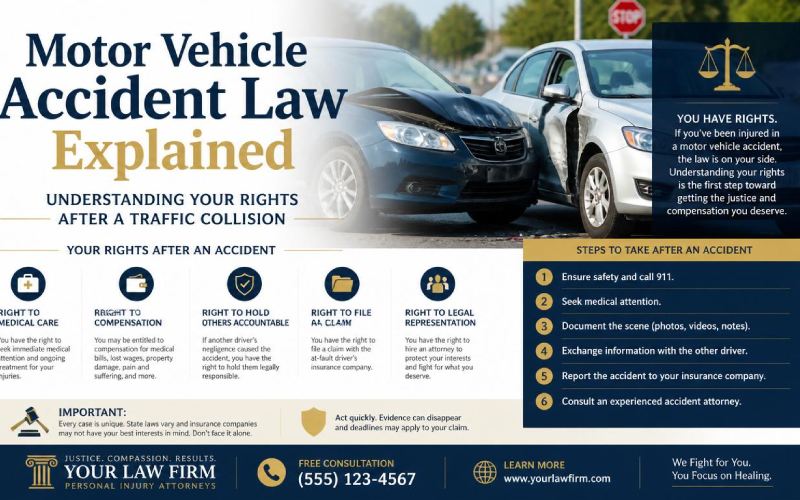
Every year, millions of motor vehicle accidents occur, resulting in minor fender benders to serious collisions. A motor vehicle accident can impact you physically, emotionally, and financially, as accident victims usually face medical expenses, lost income, vehicle repairs, and complicated insurance claims. To deal with such issues, motor vehicle accident law has been framed; understanding these laws can help drivers, passengers, or any other person to know their legal rights.
What Is Motor Vehicle Accident Law?
Motor vehicle accident law comes under the area of personal injury law that governs legal disputes arising from traffic collisions. It generally covers issues related to:
- Fault for the accident
- Insurance claims
- Compensation for injuries
- Property damage
- Medical expenses
- Wrongful death claims
How Is Fault Determined?
The liability primarily depends on whether a driver acted negligently, which is usually decided by considering these factors:
- Speeding
- Distracted driving
- Driving under the influence
- Running red lights
- Failing to yield
- Reckless driving
Evidence used to determine fault may include:
- Police reports
- Witness statements
- Traffic camera footage
- Photographs
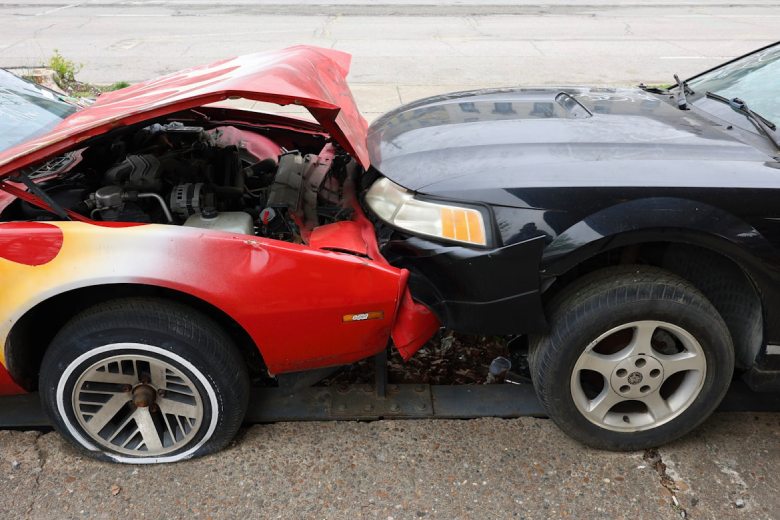
- Vehicle damage
- Accident reconstruction
Common Types of Motor Vehicle Accidents
Motor vehicle accident law is a vast law that covers multiple types of collisions, such as:
- Rear-end collisions
- Head-on crashes
- Side-impact (T-bone) accidents
- Multi-vehicle collisions
- Hit-and-run accidents
- Motorcycle accidents
- Truck accidents
- Pedestrian and bicycle accidents
What Compensation May Be Available?
Compensation is the amount received by injured individuals, and it typically covers:
- Medical bills
- Future medical treatment
- Lost wages
- Reduced earning capacity
- Property damage
- Pain and suffering
- Emotional distress
- Rehabilitation expenses
Insurance and Motor Vehicle Accidents
Insurance plays a significant role in accident claims. Depending on the insurance type and state laws, drivers are usually covered for:
- Liability insurance
- Personal injury protection (PIP)
- Uninsured motorist coverage
- Underinsured motorist coverage
- Collision coverage
Comparative and Contributory Negligence
In situations where the accident happened due to the negligence of more than one person, the responsibility may be shared by multiple persons. It reduced the burden on a single person.
What Should You Do After an Accident?
What you immediately do after an accident significantly impacts your legal rights and health, too. Here are some important actions that you should take immediately:
- Seek medical attention.
- Contact law enforcement if required.
- Exchange information with the other driver.
- Photograph the accident scene.
- Collect witness contact information.
- Notify your insurance company.
- Keep records of medical treatment and expenses.
When Should You Contact an Attorney?
Generally, it is recommended to contact an attorney in cases where:
- You suffered serious injuries.
- Fault is disputed.
- Multiple vehicles were involved.
- An insurance company denies or undervalues your claim.
- A commercial truck or government vehicle was involved.
- A wrongful death occurred.
Time Limits for Filing a Claim
Motor vehicle accident claims are subject to statutes of limitations, which means there are standard guidelines for filing lawsuits that should be followed strictly. These guidelines depend on:
- Personal injury claims
- Property damage claims
- Wrongful death actions
- Claims against government entities
Common Mistakes to Avoid
These are some common mistakes to avoid to strengthen your chances of success.
- Delaying medical treatment
- Admitting fault without knowing all the facts
- Accepting a quick settlement without reviewing it carefully
- Posting details about the accident on social media
- Failing to preserve evidence
Frequently Asked Questions (FAQs)
What is Motor Vehicle Accident Law?
Motor vehicle accident laws are laws governing legal disputes involving traffic collisions, including liability, insurance claims, and compensation for injuries or property damage.
Can I Recover Compensation if I Was Partially at Fault?
Yes, you can recover compensation if you were partially at fault. Still, it should be as per the rules, and the final decision will be made by authoritative bodies.
How Long Do I Have to File a Motor Vehicle Accident Lawsuit?
There is no fixed deadline for all cases. The specific deadline depends on state laws and your case type. You should check these details to avoid late filing.
Conclusion
Motor vehicle accident laws are meant to help resolve the legal and financial consequences of traffic collisions while ensuring the injured individual receives fair compensation for their loss. These cases can be time-consuming and require you to follow a strict time limit. The actions you take immediately after a motor vehicle accident play a significant role in deciding the fate of your case.

Website Archiving for Legal and Compliance Teams

Can an Emergency Justify Violating a Distracted Driving Statute?

Who Is Liable When Space Debris Falls Back to Earth?
How Negligence Affects the Outcome of an Injury Claim