
Wrongful Termination Deadlines Explained: How Long Do You Have to File a Claim?
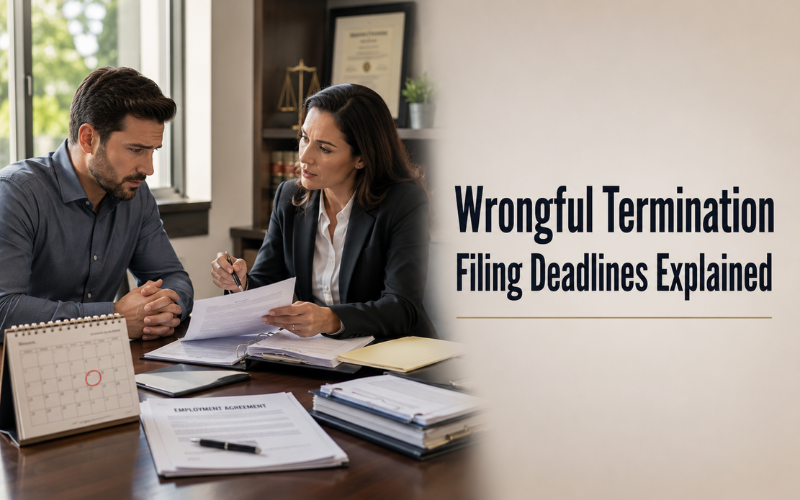
Wrongful termination can be emotionally and financially very challenging, as it involves financial loss along with the stress of wrongful termination. However, the law related to wrongful termination is carefully designed to resolve issues involving employment disputes. Let’s discuss this topic in detail.
What Is Wrongful Termination?
It is a situation where an employer removes an employee from the organization without any valid reason.
Examples include:
-
Discrimination
-
Retaliation
-
Whistleblower activity
-
Exercising protected legal rights
-
Breach of an employment contract
-
Family or medical leave rights
What Is a Statute of Limitations?
It is the general legal timeline for submitting a claim or lawsuit. After this deadline, it becomes complicated and challenging to file a lawsuit under this domain, despite its legitimacy.
These deadlines exist to:
-
Preserve evidence
-
Encourage timely action
-
Protect witnesses' memories
-
Promote fairness in legal proceedings
Why There Is No Single Deadline
Generally, people believe that there is one statute of limitations for all wrongful termination claims. But in reality, these timelines differ significantly on the basis of factors like:
-
Employment discrimination
-
Retaliation
-
Wage disputes
-
Employment contracts
-
Public policy violations
Discrimination and Retaliation Claims
Wrongful termination claims involving discrimination or retaliation usually require employees to file an administrative charge before filing a lawsuit.
Examples include claims based on:
-
Race
-
Sex
-
Religion
-
National origin
-
Disability
-
Age
Contract-Based Wrongful Termination Claims
These types of cases are formed on the grounds of breach of conditions mentioned in a contract. Contracts can be of many types, such as:
-
Written employment agreements
-
Executive contracts
-
Severance agreements
Retaliation and Whistleblower Claims
Employees who face negative consequences, such as removal from the job for reporting illegal conduct or exercising protected rights, may file whistleblower and retaliation claims.
Examples include reporting:
-
Safety violations
-
Fraud
-
Wage violations
-
Discrimination
Each statute has filing requirements and deadlines.
State Laws Can Affect Deadlines
Employment laws can vary significantly from state to state, which means:
-
Filing deadlines differ.
-
Procedures differ.
-
Available remedies differ.
The same type of wrongful termination claim may have different deadlines depending on the location of termination.
What Happens If You Miss the Deadline?
Missing the statute of limitations can significantly impact your case and can result in situations like:
-
The employer can request dismissal.
-
Courts will refuse to hear the case.
-
Compensation may become unavailable.
That’s why you should act fast.
Evidence Should Be Preserved Immediately
Waiting too long can make it harder to prove your point and may give employers more time to prepare against you.
Important evidence may include:
-
Employment contracts
-
Performance reviews
-
Emails
-
Text messages
-
Disciplinary records
-
Witness statements
When Should You Contact an Attorney?
Wrongful termination case guidelines may vary significantly from state to state. It is often advisable to hire an expert attorney for help in:
-
Identify applicable deadlines
-
Determine potential claims
-
Preserve evidence
-
File required administrative complaints
-
Protect legal rights
You can easily find a wrongful termination attorney using Legably, which is a lawyer directory platform.
Common Mistakes Employees Make
Here are some of the most common mistakes made by employees that you should definitely avoid:
-
Assuming there is plenty of time to act
-
Ignoring administrative filing requirements
-
Failing to save evidence
-
Waiting until memories fade
-
Relying solely on verbal communications
Frequently Asked Questions (FAQs)
What is The Statute of Limitations For Wrongful Termination?
There is no fixed deadline for all cases. These deadlines differ from state to state.
Can I Still Sue if I Miss the Filing Deadline?
It depends on the court’s decision; if you can prove a genuine reason behind your missing deadline, then the court may consider your appeal.
Do Discrimination Claims Have Different Deadlines?
Yes, generally discrimination and retaliation claims have different deadlines because they require employees to file administrative complaints within specific time periods before filing a lawsuit.
Conclusion
The statute of limitations for wrongful termination varies significantly based on the nature of the claim and the laws that apply in that particular state. You should check your state’s guidelines carefully to avoid missing any crucial guidelines. In this article, we discussed this topic in detail and hope you like reading it and find it informative. If so, then do share this post with others as well.

Website Archiving for Legal and Compliance Teams

Can an Emergency Justify Violating a Distracted Driving Statute?

Who Is Liable When Space Debris Falls Back to Earth?

How Negligence Affects the Outcome of an Injury Claim