


Federal Perjury Lawyers
Facing allegations of false testimony or a "perjury trap"? Hire elite U.S. Federal Perjury Lawyers to challenge 18 \ U.S.C. \ 162 and \ 1623 charges, litigate the "materiality" of statements.


Narrow Results by Sub Category
Our Best Lawyers
Lawyer of the Year" Honourees in Worldwide
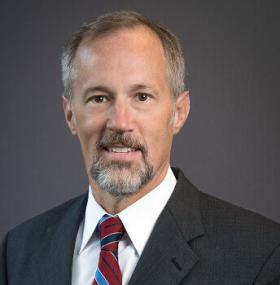
Robert D. Reese
-
Practice Areas
-
Contact Number


W. James McAnelly
-
Practice Areas
Corporate Law, Leveraged Buyouts & Private Equity Law
Litigation & Controversy - Tax
-
Contact Number
+00 1234567890

Theresa Webb
-
Practice Areas
Corporate Law, Leveraged Buyouts & Private Equity Law
Litigation & Controversy - Tax
-
Contact Number
+00 1234567890

Cameron Williamson
-
Practice Areas
Corporate Law, Leveraged Buyouts & Private Equity Law
Litigation & Controversy - Tax
-
Contact Number
+00 1234567890

Eleanor Pena
-
Practice Areas
Corporate Law, Leveraged Buyouts & Private Equity Law
Litigation & Controversy - Tax
-
Contact Number
+00 1234567890

Devon Lane
-
Practice Areas
Corporate Law, Leveraged Buyouts & Private Equity Law
Litigation & Controversy - Tax
-
Contact Number
+00 1234567890

Devon Lane
-
Practice Areas
Corporate Law, Leveraged Buyouts & Private Equity Law
Litigation & Controversy - Tax
-
Contact Number
+00 1234567890
Lawyers List
Robert D. Reese Verified
5.0 12 Reviews
Call Now for Free Consultation + Offers Video Conferencing
Robert D. Reese is an attorney at Bond & Botes Law Offices in Florence, Alabama, where he helps clients navigate complex legal and financial matters. Backed by a firm with more than 30 years of experience, he is part of a team that has assisted over 100,000 individuals and families through bankruptc...
 View Website
 Contact Us
 View Profile
In the United States, federal perjury is a direct assault on the integrity of the judicial system, carrying severe penalties designed to deter untruthfulness in official proceedings. The area of a federal perjury lawyer is to dismantle the government’s case by proving a lack of "willfulness" or demonstrating that the alleged false statement was not "material" to the outcome of the proceeding. In 2026, this role has become highly technical; federal prosecutors now use AI-powered transcript analysis to identify "irreconcilable contradictions" across multiple testimonies, making a strategic, early defense more critical than ever.
Critical Practice Areas in Federal Perjury Law
Perjury defense requires a deep understanding of the specific context in which the testimony was given:
- General Perjury ( 18 \ U.S.C. \ \S \ 1621 ): Defending against claims of false statements made under oath in any federal proceeding, including depositions, congressional hearings, and regulatory affidavits.
- Grand Jury and Courtroom Perjury ( 18 \ U.S.C. \ \S \ 1623 ): Specialized defense for statements made before a federal judge or grand jury. This statute is more dangerous because the government does not have to prove which of two contradictory statements is false, only that they cannot both be true.
- False Statements ( 18 \ U.S.C. \ \S \ 1001 ): Representing individuals accused of lying to federal agents (FBI, IRS, SEC) even when not under oath. This is the "perjury-adjacent" charge frequently used in white-collar investigations.
- Subornation of Perjury ( 18 \ U.S.C. \ \S \ 1622): Defending those accused of "procuring" or inducing another person to testify falsely.
- Congressional Perjury: Defense for high-profile individuals subpoenaed to testify before House or Senate committees, where political visibility increases the likelihood of prosecution.
Foundational Statutes and Governing U.S. Law
Effective perjury defense in 2026 hinges on a mastery of the U.S. Code and the latest Sentencing Commission adjustments:
- The "Materiality" Standard: Under Kungys \ v. \ United \ States, the government must prove the false statement had a "natural tendency to influence" the decision-making body. If the lie was about a trivial matter, it is not legally perjury.
- The "Two-Witness Rule" (Section 1621 only): A traditional U.S. protection requiring the government to provide more than the testimony of a single witness to prove the falsity of a statement.
- The "Recantation" Defense: Under Section 1623(d), if you admit your testimony was false during the same proceeding before it has substantially affected the matter, the prosecution may be barred.
- U.S.S.G. \S 2J1.3 (2026 Update): The Federal Sentencing Guidelines for perjury. In 2026, the "Base Offense Level" remains 14, but "Substantial Interference with the Administration of Justice" can lead to significant increases in prison time.
Critical Triggers: When to Secure Perjury Counsel
Engage a federal specialist immediately if any of these legal triggers occur:
- Notice of "Inconsistent Statements": If a prosecutor or agent points out that your current testimony contradicts a previous deposition or email.
- Target Letter Following a Grand Jury Appearance: If the DOJ signals you are a "target" after you have already testified under oath.
- Preparation for a "Proffer" Session: Before you speak with federal agents in a "Queen for a Day" session, a lawyer must ensure you are protected from accidental perjury.
- Discovery of an Error in Sworn Documents: If you realize you signed a federal affidavit or tax document containing inaccuracies, a lawyer is needed to navigate the "Recantation" or "Correction" process safely.
- Subpoena for a Federal Civil Deposition: Civil perjury can be referred for criminal prosecution; a lawyer should "prep" you to ensure your answers are literally true and non-evasive.
Selecting Your Advocate: Finding Perjury Lawyers on Legably
As we have discussed, federal perjury has become a highly technical field of law in 2026. With continuous advancement, you need a proficient lawyer who can handle your case and specialize in defending against aggressive cross-examination designed to force a witness into an accidental contradiction. Legably will make the lawyer selection process convenient for you with its advanced search feature and location filter.
Initial Strategy Session: Crucial Questions for Your Attorney
- Can we mount a 'Literal Truth' defense if my statement was technically accurate but meant to be misleading?
- Does the 'Two-Witness Rule' apply to my specific charge, or is the government proceeding under the more lenient Section 1623?
- Is it too late to utilize the Section 1623(d) Recantation defense to bar this prosecution?
- How do the 2026 Sentencing Guidelines calculate the 'loss' or 'interference' if no specific financial harm occurred?
Frequently Asks Questions
-
It occurs when a prosecutor calls a witness to testify primarily to elicit a lie (knowing the truth beforehand) rather than to gain new information, creating a basis for a criminal charge.
-
Yes. If the deposition is part of a federal case, lying under oath is a violation of Section 1621 and can result in up to 5 years in federal prison.
-
It can be, provided it is true. However, if the government can prove you did remember (e.g., through recent emails or texts), "I don't recall" can itself be charged as a false statement.
-
The statement doesn't have to actually change the outcome of the trial; it only needs to be capable of influencing a judge, jury, or federal agency.
Can you provide case studies or examples of similar projects you have completed? What is your approach to project management and communication? How do you handle challenges or unexpected issues during the development process? Can you integrate third-party tools and services as required?
Can you provide case studies or examples of similar projects you have completed? What is your approach to project management and communication? How do you handle challenges or unexpected issues during the development process? Can you integrate third-party tools and services as required?
Can you provide case studies or examples of similar projects you have completed? What is your approach to project management and communication? How do you handle challenges or unexpected issues during the development process? Can you integrate third-party tools and services as required?
Can you provide case studies or examples of similar projects you have completed? What is your approach to project management and communication? How do you handle challenges or unexpected issues during the development process? Can you integrate third-party tools and services as required?
Can you provide case studies or examples of similar projects you have completed? What is your approach to project management and communication? How do you handle challenges or unexpected issues during the development process? Can you integrate third-party tools and services as required?
Can you provide case studies or examples of similar projects you have completed? What is your approach to project management and communication? How do you handle challenges or unexpected issues during the development process? Can you integrate third-party tools and services as required?
Can you provide case studies or examples of similar projects you have completed? What is your approach to project management and communication? How do you handle challenges or unexpected issues during the development process? Can you integrate third-party tools and services as required?
Can you provide case studies or examples of similar projects you have completed? What is your approach to project management and communication? How do you handle challenges or unexpected issues during the development process? Can you integrate third-party tools and services as required?