
Can You Legally Record Conversations at Work? Understanding State Recording Laws and Employee Rights
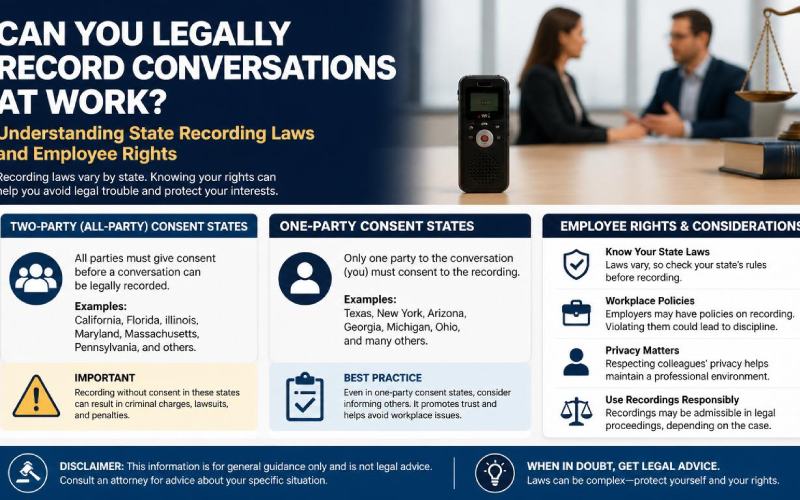
Many people are habituated to recording all conversations, especially at work. With time, recording workplace conversations has become easier than ever with smartphones and other smart devices. However, many of us are unaware that recording a conversation without consent can have serious legal consequences depending on where it takes place. In today’s article, we will discuss this topic in detail, so keep reading.
Are Workplace Conversations Legal to Record?
Its legality depends on factors like:
- The state's recording laws
- Whether the conversation is private
- Who is participating in the conversation
- The purpose of the recording
One-Party Consent vs. All-Party Consent States
State recording laws are generally divided into two categories:
- One-Party Consent: In many states, consent of a single person involved in the conversation is enough to record their conversation with all. However, it should not violate any other law.
- All-Party (Two-Party) Consent: In some states, consent of every participant is required before someone starts recording their conversation; without consent, it may attract criminal penalties.
Does Federal Law Allow Recording?
Yes, federal law generally allows recording, and they typically follow the one-party consent rule. However, for privacy protection, state laws are considered prior to federal law; that’s why it is important to check your state’s law.
Can Employers Record Employees?
Under certain circumstances, employers are allowed to record workplace communication.
Examples include:
- Customer service quality monitoring
- Security surveillance
- Business-related phone calls
- Training purposes
Can Employees Record Their Managers?
Whether an employee can record a supervisor or not depends on state consent laws. If the employee is recording in a situation where one party consent is required, and the employee is present in that conversation, then it will be lawful. If that conversation required all-party consent, then recording managers without their consent may violate the law.
Recording Conversations to Document Misconduct
Many times, employees record conversations to preserve evidence of:
Workplace harassment
Discrimination
Retaliation
Wage violations
Threats or misconduct
Well! It sounds like a great move, but it does not automatically make this action legal. You should consult an experienced attorney for complete legal guidance on this matter.
What Happens if You Record Someone Illegally?
If you end up recording someone illegally, then it may result in:
- Criminal charges
- Civil lawsuits
- Monetary damages
- Exclusion of the recording as evidence
- Workplace disciplinary action
Workplace Policies on Recording
Many employers have strict policies regarding audio or video recordings and include these terms in the employment contract in the form of:
- Restrict unauthorized recordings
- Protect confidential business information
- Safeguard customer privacy
- Address recording during meetings
Best Practices Before Recording
If you really want to record a workplace conversation, then you should:
- Learn your state's recording consent law.
- Review your employer's workplace policies.
- Consider whether the conversation is private.
- Understand the legal risks before recording.
Consult an employment attorney if you believe your legal rights are at issue.
Frequently Asked Questions (FAQs)
Can I Legally Record a Conversation With My Boss?
Recording consents are of two types: one-party and all-party. If your state laws permit one-party consent recording, then you can record, it may be considered illegal.
Can My Employer Record Workplace Conversations?
Yes, employers are generally allowed to record business-related communications for legitimate purposes. However, they should take care of their employee’s privacy.
Can I Use a Workplace Recording as Evidence in Court?
It depends on your case’s context and the state’s laws. Whether you can or not depends upon your case’s factors and state rules.
Conclusion
Recording a conversation seems the easiest way to collect evidence, but whether it is legal or not depends on various factors. Generally, to record a conversion, consent is categorized into two categories: one-party and all-party. That’s why it becomes important to understand all these terms, your state’s laws, and organizations' specific rules if you have signed for them to avoid any legal trouble.

Website Archiving for Legal and Compliance Teams

Can an Emergency Justify Violating a Distracted Driving Statute?

Who Is Liable When Space Debris Falls Back to Earth?

How Negligence Affects the Outcome of an Injury Claim