
Legal Drinking Age in Florida: What Every Parent and Minor Should Know
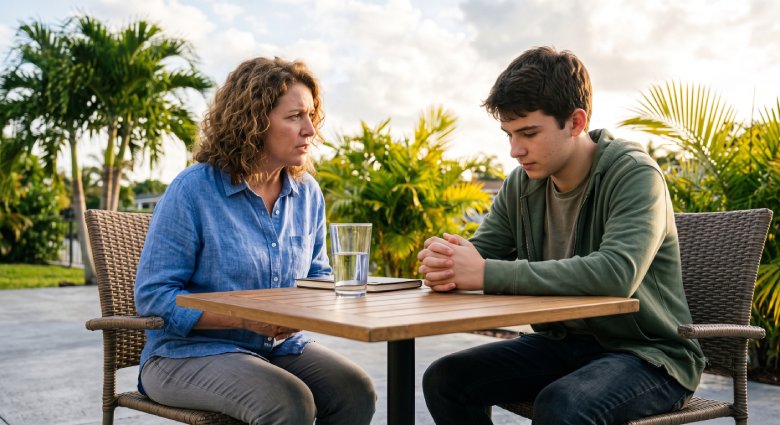
As a parent of a minor in Florida, you’ve had to discuss drinking with your child. Florida, like all other states, has a legal drinking age of twenty-one. The laws pertaining to underage drinking can be very confusing.
During my work as a journalist covering family law and related topics, I’ve become familiar with the questions and problems Floridians have concerning these laws. Many parents want to protect their children and young adults.
Likewise, youth want to understand and push the limits of the law. I’ll cover the main ideas and information related to Florida’s underage drinking laws.
The Basic Law: Why 21?
Why is the legal drinking age in Florida twenty-one? In the 1980s, there was a focus on underage drinking and driving. In 1984, Congress passed a law (the 21st Amendment to the U.S. Constitution) requiring all states to raise their drinking ages to twenty-one in order for the state to receive federal highway funds. Each state passed laws making it a crime for persons under twenty-one to possess or consume alcohol. Florida enacted this law (Florida Statute 562.111). Like other states, Florida also has a law making it a crime to sell or give alcohol to a person under twenty-one.
Penalties Minors Should Take Seriously
A lot of teens assume underage drinking is a slap on the wrist. It isn't. A first offense can carry real consequences that follow a young person into adulthood. Here's a quick look at what's at stake.
|
Offense |
Possible Penalty |
|
Underage possession (first) |
Second-degree misdemeanor, up to 60 days jail, $500 fine |
|
Underage possession (second) |
First-degree misdemeanor, up to 1 year jail, $1,000 fine |
|
Using a fake ID |
Third-degree felony in many cases |
|
Driving with any alcohol (under 21) |
License suspension for 6 months |
Florida enforces a zero-tolerance rule for drivers under 21. If a teen is caught with a blood alcohol level of just 0.02%, they lose their license. That's barely one drink. For young drivers, the safest number is always zero.
Are There Any Exceptions?
This is where many parents get surprised. Unlike some states, Florida keeps its exceptions extremely narrow. There is no broad allowance for parents to serve their own children alcohol at home. A few limited situations do exist:
-
Religious ceremonies where a small amount of wine may be used.
-
Certain culinary or medical contexts, though these are rare and specific.
-
Tasting for employment, where someone 18 or older working in the industry may taste but not swallow under supervision.
Outside of these, the answer is simple. There's no legal "family exception" that lets you pour your 17-year-old a glass of wine at dinner. Many parents believe otherwise, and that assumption can lead to serious trouble.
The Fake ID Problem
I think the biggest problem for minors today is the easy availability of fake IDs. I think the punishment and potential fallout from using or making a fake ID is grossly disproportionate to the crime. In the state of Florida, using or making a fake ID to purchase alcohol is a FELONY.
Being charged with a felony as a minor means it will never legally leave your record. Potential consequences can include ineligibility for certain types of employment and education.
So think about it this way, you can go to school with your friends and peers and be treated as an adult, or you can break the law by using a fake ID and potentially never leave your peers in school.
Social Hosting: A Risk Parents Overlook
Many parents believe they are making the least worst decision when they allow their teen to host a party with the hope that teens will drink in a more safe and supervised environment. Parents sometimes believe this creates a safer environment than other unsupervised alternatives.
While this may seem logical, there are many legal liabilities that parents can face as a result of teen alcohol consumption on their property. Florida has laws that require adults to face legal consequences if they knowingly allow minors to consume alcohol.
These consequences can include legal liability and lawsuits. Additionally, if a teen driver consumes alcohol at a party and leaves to drive, the parent may also face legal consequences for providing alcohol to a minor. This may also be the case if the teen driver is involved in an accident. There are a number of risks associated with providing alcohol to a minor, including the following:
-
Criminal Consequences for Providing Alcohol to a Minor
-
Lawsuits as a result of Alcohol Related Injury to a Third Party by a Minor
-
Out-of-pocket Expenses as a result of Alcohol Related Injury to a Minor
School and College Consequences
There are potential academic consequences for children who host drinking parties. Students can lose their athletic eligibility, and scholarships. Students can be suspended or expelled from school. Students can lose on campus housing. Some families lose thousands of dollars in financial aid for students who host drinking parties and are caught. A student can potentially lose their opportunity for a higher education due to a drinking party.
How Parents Can Talk About Alcohol
The best safeguard for kids is an open dialogue. Honest, two-way communication with kids builds a solid foundation of trust. During my professional interactions with families, I have found that honest parents are likely to have kids that make safe and sound choices. Here are some of the methods that have been proven to work.
-
Start talking to your kids about alcohol and its related implications long before it becomes an issue.
-
Justifying your rules with reasoning helps your kids to understand your concerns and builds trust.
-
Kids need to know that they can always call for help. Let them know they can always contact you for help if they are in an uncomfortable or dangerous situation.
-
Kids watch what you do. Always remember to practice what you preach.
-
Talk to your kids to help them prepare to say ‘NO’ if they are faced with a situation where they feel peer pressure to consume alcohol.
Always keep in mind the outcome of every conversation you have with your kids should be to earn their trust so that they are comfortable coming to you for help when situations get complicated.
Practical Safety Guidance for Teens
Although these tips are mostly for young people, it is helpful for everyone to be reminded of these practices. Be aware that alcohol is usually present when situations get out of control. Staying out of control situations can usually be prevented by following these practices.
-
Do not take the risk of getting in a situation where you are breaking the law by getting in to a vehicle driven by someone who is under the influence of alcohol or by carrying alcohol for someone.
-
Alcohol possession is alcohol possession, no matter how briefly you might be holding on to it for a friend.
-
Avoid using a fake ID to purchase alcohol.
You've probably heard that you should be able to say no to things and still keep your friends. This is definitely true.
There are a variety of alcohol-related charges, including possession of alcohol by a minor, public intoxication, and drunk driving. Criminal attorney can explain all of the charges, advise you on your legal rights, and help you to understand the legal procedure that you are about to encounter. Many legal writers also share informative article on drinking laws, criminal defense by submitting a guest post on legal blog.
Frequently Asked Questions
What is the Legal Drinking Age in Florida?
Florida, like many other states, has a drinking age of 21.
Can parents legally give their own child alcohol at home in Florida?
Florida does not have a family exception, so it is not legal for parents to provide alcohol to their children at home.
What happens if a minor is caught driving after drinking?
In Florida, if a minor is caught driving with any alcohol in his or her system, even a very small amount, the minor’s driving privileges will be suspended for a period of six months.
Can the parents who hosted a teen party with alcohol shipped for allowing underage drinking?
Yes, the parents can be personally liable for the actions of the minor guests and can be criminally and/or civilly liable.
Final Thoughts
The Florida Legislature set the Minimum Legal Drinking Age to 21 to shield Florida's youth from one of the most irresponsible and reckless periods in the human condition. Breaking Florida's laws governing the Minimum Legal Drinking Age will not protect your child and may expose your child to potential harm.
Legal Drinking Age in Florida: What Every Parent and Minor Should Know


Moving to New Zealand With a Partner: Understanding the Visa Pathway

How Professional Licensing Can Be Affected by Criminal Convictions

What to Do When an Insurance Company Disputes Your Accident Claim?

Website Archiving for Legal and Compliance Teams
Can an Emergency Justify Violating a Distracted Driving Statute?

Who Is Liable When Space Debris Falls Back to Earth?
How Negligence Affects the Outcome of an Injury Claim