

Switching Lenders? The Legal Steps Behind Refinancing a Home Loan in New Zealand
- News 10 October, 2026
When interest rates move, a lot of homeowners start comparing what their current bank is offering with what is available elsewhere. Moving a home loan to a new lender can look like a simple matter of signing a few forms, but there is a legal process running underneath it. Knowing roughly what that process involves makes it easier to plan the timing and to weigh up whether a move is actually worthwhile.
What Refinancing Really Means
When homeowners refinance a mortgage, they are, in practical terms, replacing one loan with another. If the new loan is with a different bank, the old mortgage registered against the title has to be removed and a new one registered in its place. Even though the property is not changing hands, this involves much of the same legal machinery as a purchase. If the borrower is simply restructuring with the same bank, the legal work is usually lighter, though new loan documents may still need to be signed and explained.
Why a Lawyer Is Involved
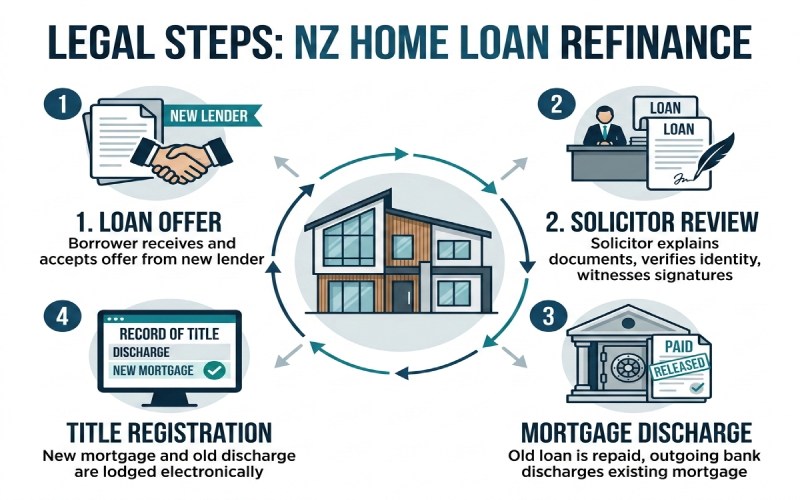
Banks in New Zealand generally require a solicitor to act when a new mortgage is being registered. The lawyer receives instructions from the incoming lender, explains the loan and mortgage documents to the borrower, witnesses signatures, verifies identity and certifies to the bank that everything has been completed correctly. On the other side, the lawyer requests a repayment figure from the outgoing lender and arranges for that mortgage to be discharged. All of this is coordinated so that the new funds arrive and the old loan is repaid on the same day.
The Steps in Order
The usual sequence starts with the borrower receiving a loan offer from the new lender. Once that is accepted, the lender sends instructions to the borrower's solicitor. The solicitor prepares the documents and meets with the borrower to sign. A settlement date is agreed, and the outgoing bank is asked for a settlement statement showing exactly what is owed on that date. On settlement day, the new lender advances the funds, the old loan is repaid, the discharge of the old mortgage and the registration of the new one are lodged electronically, and the borrower receives confirmation that the change is complete.
Costs That Are Easy to Miss
The headline interest rate is only part of the picture. Borrowers on a fixed rate may face a break fee for repaying early, and the amount depends on how rates have moved since the loan was fixed. Some lenders also expect a cash contribution to be repaid if the loan is moved within a certain period of it being paid. There may be a discharge fee from the outgoing bank and legal fees for the work involved. Adding these together and comparing them against the expected saving gives a much more honest answer than comparing rates alone. Asking for a break fee estimate early on is a sensible first step, since it can change from day to day.
How Long It Usually Takes
A refinance can often be completed within a couple of weeks of the loan being approved, but this depends on how quickly each party responds. Outgoing banks typically ask for a minimum notice period before they will provide a repayment figure and release their mortgage. Delays tend to occur when signed documents are returned late, when identity verification is incomplete, or when the settlement date falls close to a public holiday. Building in a little slack, particularly if a fixed rate term is about to expire, helps avoid a period on a higher floating rate.
When the Refinance Changes Who Is on the Loan
Sometimes a refinance is prompted by a change in circumstances, such as a separation, a new partner coming onto the title, or parents stepping back from a guarantee they gave years earlier. These situations involve more than swapping one mortgage for another. A change in ownership has to be documented and registered, and guarantors normally need their own independent advice. This is where the work starts to overlap with that of a conveyancing lawyer, since the title itself is being altered alongside the lending. It is worth raising any change of this kind at the very start, because it affects both the documents required and the time needed.
Questions Worth Asking Before You Sign
A few simple questions can prevent surprises. What is the total cost of leaving the current lender, including any break fee and repayment of incentives? Does the new loan carry any conditions about how long it must stay in place? Are all borrowers and guarantors available to sign before the proposed settlement date? Will the new lender require an updated valuation or proof of insurance? Having clear answers makes it much easier to decide whether to proceed now, wait until a fixed term ends, or stay put.
A Calm, Practical Process
Refinancing is routine work for most property lawyers, and for the majority of borrowers it runs without drama. The value of legal input lies mostly in the explanation. Loan agreements and mortgage terms are long documents, and it helps to have someone walk through what they mean for your particular situation before you commit to them. With realistic expectations about cost and timing, a refinance can be a tidy and worthwhile piece of financial housekeeping.
Disclaimer: This article is provided for general informational purposes only and does not constitute legal advice. Every legal situation is different, and the information here may not apply to your particular circumstances. You should seek advice from a qualified lawyer before making any legal decisions or taking any action based on the content of this article.
Editorial contribution by Elliott SEO Auckland

Protecting Your Wealth in Divorce

The Hidden Costs of a Personal Injury: Why Acting Fast Matters

The Hidden Risks of Parking Lot Accidents at the Beach

Legal Drinking Age in Florida: What Every Parent and Minor Should Know


Moving to New Zealand With a Partner: Understanding the Visa Pathway

How Professional Licensing Can Be Affected by Criminal Convictions

What to Do When an Insurance Company Disputes Your Accident Claim?