
Can You Sue Your Ex-Spouse for Emotional Distress After a Divorce? Understanding Your Legal Rights
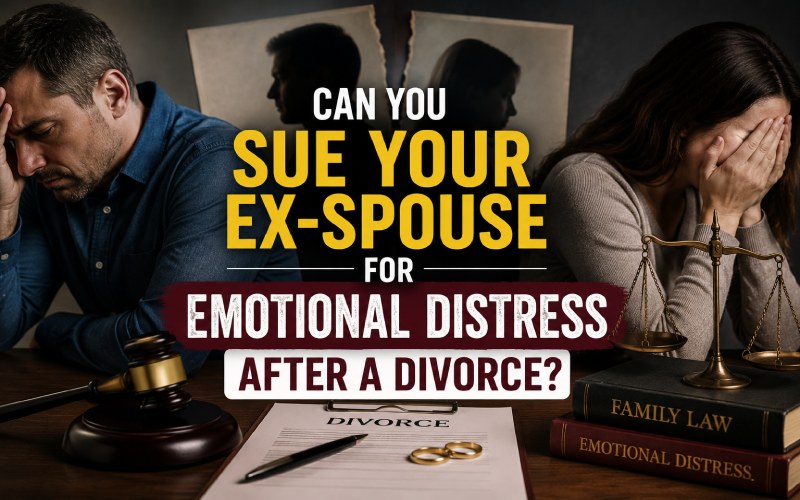
Divorce is an emotionally and financially challenging process. Its impact is lifelong and not limited to the end of the marriage. It involves allegations of manipulation, harassment, abuse, or other harmful conduct; these actions’ impact is simply when done by your loved one. It has become a common practice, which makes many people wonder if they can sue a former spouse for emotional distress after their divorce.
Well! Whether you are allowed to file this case or not, what will be its result, what are your legal rights, and other similar concerns primarily depend on your case’s facts and the laws of the state where the claim is brought. Let’s understand this matter in detail.
Can You Sue an Ex-Spouse for Emotional Distress?
Maybe. The validity of your claim primarily depends on factors like:
- The conduct involved
- Whether the behavior was intentional or reckless
- The severity of the emotional harm
- Available evidence
- Applicable state law
What Is Emotional Distress?
Emotional distress typically refers to significant psychological or emotional suffering caused by another person’s conduct.
Examples may include:
- Severe anxiety
- Depression
- Panic attacks
- Emotional trauma
- Sleep disorders
- Post-traumatic stress symptoms
To file a case based on emotional harm, it should be supported by credible evidence.
When Might a Lawsuit Be Possible?
As we know, every case is different, but there are some common grounds on which a lawsuit seems possible, which are:
- Domestic abuse
- Stalking
- Threats of violence
- Harassment
- Intentional intimidation
- Fraud or other wrongful acts causing severe emotional harm
Intentional Infliction of Emotional Distress
Intentional infliction of emotional distress (IIED) is one possible legal claim that requires concrete evidence to prove that the defendant engaged in extreme and outrageous conduct that was intentional to cause severe emotional distress.
Negligent Infliction of Emotional Distress
Negligent infliction of emotional distress (NIED) is not applicable in common situations. Some states recognize NIED, and before filing your case through it, it is important to consult with an attorney for legal guidance.
What Evidence Can Support an Emotional Distress Claim?
Here is the list of evidence that can support your case:
- Medical records
- Mental health treatment records
- Therapist or psychologist testimony
- Witness statements
- Text messages
- Emails
- Photographs
- Police reports
- Documentation of ongoing harassment or abuse
Can Conduct During the Marriage Be the Basis for a Lawsuit?
It depends on your case’s facts. If you have already raised these concerns while taking a divorce and the judge has already punished your spouse, then your case may not be approved by the court. However, for precise guidance, you should consult with a legal professional experienced in this domain.
What Compensation May Be Available?
If you win this case and your claim is successful, then you may receive compensation for:
- Emotional suffering
- Mental anguish
- Medical expenses
- Counseling or therapy costs
- Lost income, where applicable
- Other damages recognized under state law
The final amount will depend on the evidence and applicable laws.
When Should You Speak With an Attorney?
Legal advice may be appropriate if:
- You experienced domestic abuse or serious harassment.
- Your emotional injuries required medical or psychological treatment.
- You believe your former spouse intentionally caused severe emotional harm.
- You are unsure whether your claim is affected by a prior divorce judgment.
- You are concerned about filing deadlines.
Common Mistakes to Avoid
While filing for a case against your ex-spouse for emotional distress, you should definitely avoid:
- Assuming every painful divorce creates a lawsuit.
- Waiting too long to seek legal advice.
- Deleting important communications or records.
- Failing to document ongoing harassment.
- Discussing the dispute publicly on social media.
Frequently Asked Questions (FAQs)
Can I Sue My Ex-spouse Simply Because the Divorce Caused Emotional Pain?
Going through a rough phase with emotional pain during the divorce process is a common thing. Generally, spouses are not allowed to file a case solely on this basis.
What Evidence Helps Prove Emotional Distress?
There is some evidence that can be used to prove emotional distress, such as medical records, therapy records, witness testimony, communications, police reports, and more.
Is There a Deadline to File an Emotional Distress Lawsuit?
Maybe it depends on your state laws. You should refer to them to know more about timing details.
Conclusion
Divorce is a challenging process; it involves both financial and emotional suffering. However, mere emotional suffering during the divorce process is not a valid ground to sue your ex-spouse for emotional distress after your divorce. In this article, we discuss this issue in detail and hope you find this discussion informative. If you need further assistance, you can contact an experienced legal professional near your location using Legably.